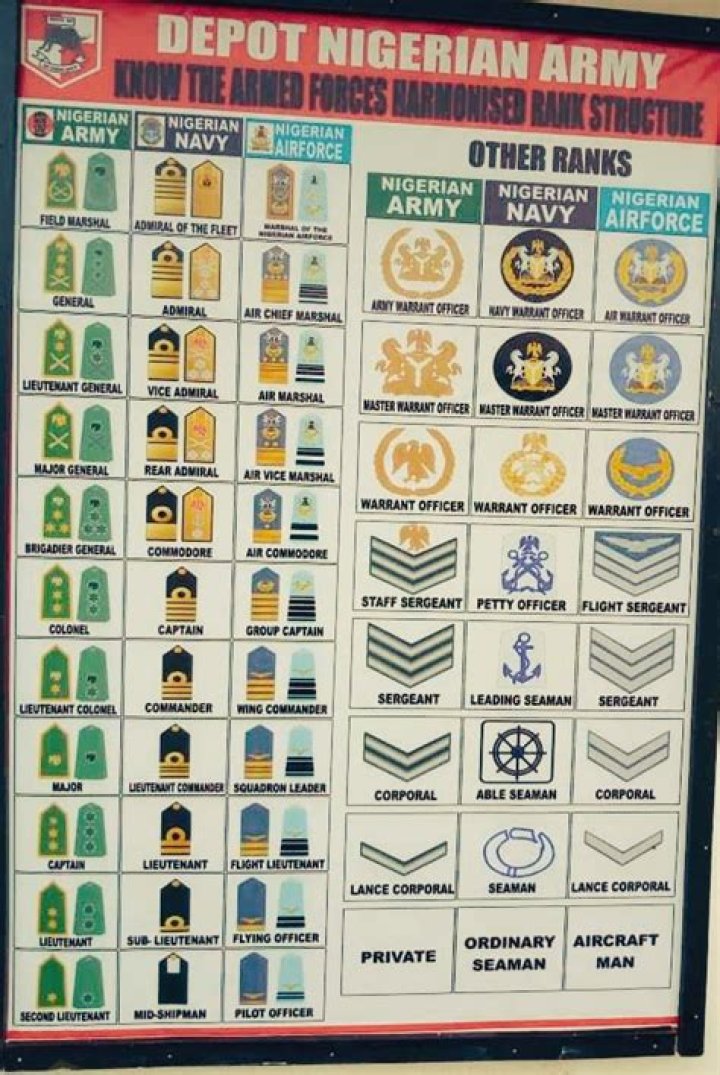
The Nigerian Army is a vital component of Nigeria's defense and security architecture, responsible for protecting the nation’s sovereignty and territorial integrity. Understanding the ranks within this esteemed institution is crucial for anyone interested in military affairs, governance, or national security. The ranks are not just titles; they represent a hierarchy that dictates responsibilities, authority, and operational command. The Nigerian Army ranks are structured in a way that mirrors many other military organizations around the world, with enlisted personnel, non-commissioned officers, and commissioned officers each playing critical roles. As we delve into the intricacies of these ranks, we will explore their significance, responsibilities, and the pathways to achieving them.
In the context of Nigeria's diverse culture and historical backdrop, the Nigerian Army has evolved over the years, adapting to the changing security landscape and the needs of the nation. The ranks have been established not only to maintain discipline but also to foster a sense of identity and belonging among the soldiers. Understanding these ranks is essential for fostering respect and camaraderie within the forces and for promoting a better understanding of military operations among civilians.
As we explore the different tiers of the Nigerian Army ranks, we will answer common questions about what each rank entails, how promotions are earned, and what the future holds for the brave men and women serving in the army. This article serves as a guide for those curious about the structure and significance of the Nigerian Army ranks and aims to shed light on the dedication and commitment required to serve in this noble institution.
What Are the Main Categories of Nigerian Army Ranks?
The Nigerian Army ranks are divided into three primary categories: Enlisted Personnel, Non-Commissioned Officers (NCOs), and Commissioned Officers. Each category plays a pivotal role in the overall function of the army, ensuring that operations run smoothly and effectively.
1. Enlisted Personnel
Enlisted personnel are the backbone of the Nigerian Army, consisting of soldiers who have joined the army without having been commissioned as officers. They typically begin their careers as:
- Private
- Corporal
- Sergeant
2. Non-Commissioned Officers (NCOs)
NCOs are experienced enlisted soldiers who have taken on leadership roles. They are responsible for the training and management of enlisted personnel and include ranks such as:
- Staff Sergeant
- Warrant Officer
- Master Warrant Officer
3. Commissioned Officers
Commissioned officers are those who have received a commission from the President or the Governor of a state, reflecting their status as leaders within the army. Their ranks include:
- Lieutenant
- Captain
- Major
- Colonel
- Brigadier General
- Major General
- Lieutenant General
- General
How Do Promotions Work Within the Nigerian Army Ranks?
Promotions within the Nigerian Army are merit-based, structured around a soldier’s performance, length of service, and completion of required training courses. Below are the key factors that influence promotions:
- Performance evaluations
- Completion of leadership training programs
- Time-in-service requirements
Are There Specific Training Programs for Each Rank?
Yes, the Nigerian Army has established several training programs designed to prepare soldiers for advancement through the ranks. These programs vary depending on the rank being pursued and may include:
- Basic Military Training
- Advanced Leadership Courses
- Specialized Tactical Training
What Is the Importance of Understanding Nigerian Army Ranks?
Understanding the Nigerian Army ranks is crucial not only for those serving in the military but also for civilians who wish to engage with the army effectively. It fosters respect for the rank structure, promotes better communication, and aids in understanding the chain of command. Additionally, a solid grasp of these ranks is essential for:
- Military enthusiasts and historians
- Individuals seeking careers in national defense
- Families of military personnel
What Are the Challenges Facing the Nigerian Army Today?
The Nigerian Army faces numerous challenges, ranging from internal management issues to external threats posed by insurgent groups. These challenges can impact the rank structure and the overall effectiveness of the army. Some of the significant challenges include:
- Insurgency and terrorism
- Logistical constraints
- Recruitment and retention of personnel
Conclusion: The Future of Nigerian Army Ranks
As Nigeria continues to navigate complex security challenges, the structure of its army, including the Nigerian Army ranks, will play a critical role in shaping its future. The dedication of soldiers at all ranks, their training, and their commitment to service are essential for maintaining the country’s peace and security. Understanding these ranks helps foster respect and appreciation for the men and women who serve, ensuring that the Nigerian Army remains a formidable force in protecting the nation's interests.
Tragic End: Understanding How Aubreigh Wyatt Took Her Own Life
Chris Stapleton And Donald Trump: A Musical And Political Journey
Unveiling The Life Of The Wife Of Amit Shah
