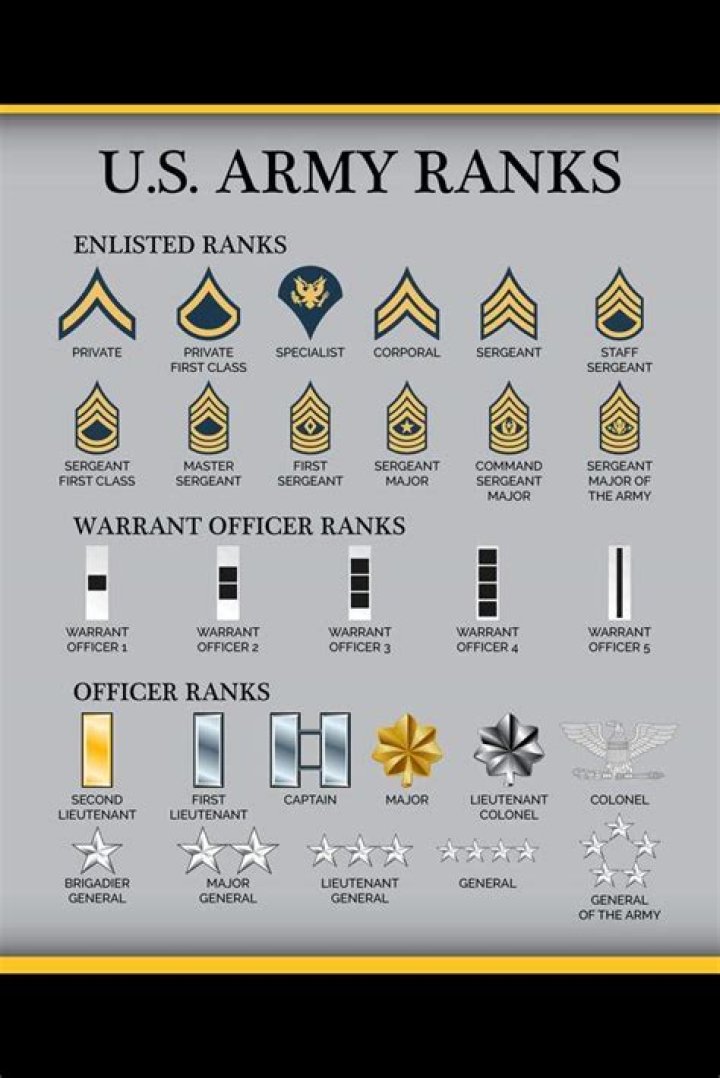
The structure of military ranks is a vital aspect of any army around the world. Each rank signifies a level of authority, responsibility, and experience, playing a crucial role in the efficient operation of military forces. An army ranks list not only provides clarity on the hierarchy but also helps individuals understand the pathway to advancement within the military. In this article, we will delve into the various ranks within an army, exploring their significance and the responsibilities that come with each level.
When discussing the army ranks list, it is essential to recognize that these ranks are not just titles; they represent years of dedication, training, and service. Each rank has its distinct role, and the individuals holding these ranks contribute to the overall mission of the military. From enlisted personnel to commissioned officers, every rank holds a unique place within the structure of army operations.
Moreover, understanding the army ranks list can be beneficial for those considering a career in the military or for civilians looking to comprehend the ranks of service members they encounter. This guide will provide a detailed overview of various ranks, their corresponding insignias, and the paths one can take to achieve them. Let's explore the ranks that make up the backbone of our armed forces.
What Are the Different Categories of Army Ranks?
The army ranks can be broadly categorized into three main groups: enlisted personnel, non-commissioned officers (NCOs), and commissioned officers. Each category has its own set of ranks, responsibilities, and expectations.
- Enlisted Personnel: These are the soldiers who carry out the fundamental tasks of the military. They include ranks such as Private, Corporal, and Specialist.
- Non-Commissioned Officers (NCOs): NCOs are responsible for training and leading enlisted soldiers. They typically hold ranks like Sergeant, Staff Sergeant, and Sergeant Major.
- Commissioned Officers: These ranks are held by individuals who have received a commission from the government. They include ranks such as Second Lieutenant, Captain, and Colonel.
How Does the Army Ranks List Differ Across Countries?
While many countries share similar rank structures, there are notable differences in the titles and responsibilities associated with each rank. For instance, the U.S. Army's ranks may differ from those in the British Army or the Indian Army. Understanding these differences is crucial for anyone studying military structures globally.
What Are the Highest and Lowest Ranks in the Army?
The lowest rank in the army is typically Private, while the highest rank can vary by country. In the U.S. Army, for example, the highest rank is General of the Army, a five-star general rank. Below is a brief overview of the highest and lowest ranks:
| Rank Type | Rank |
|---|---|
| Lowest Rank | Private (E-1) |
| Highest Rank | General of the Army (5-star) |
What Are the Responsibilities Associated with Each Rank?
Each rank within the army comes with its own set of responsibilities. For instance:
- Private: Responsible for following orders and completing assigned tasks.
- Sergeant: Leads a team of soldiers and ensures mission readiness.
- Captain: Commands a company and oversees operational planning.
- General: Provides strategic direction and leadership at a high level.
How Can One Advance Through the Army Ranks List?
Advancing through the ranks requires a combination of education, experience, and leadership skills. Soldiers can typically earn promotions by completing required training, demonstrating leadership capabilities, and fulfilling service time requirements. Each branch of the military has specific guidelines for promotions, often including:
- Time in Service
- Time in Grade
- Job Performance
- Training Completion
What Is the Significance of Insignias in the Army Ranks List?
Insignias play a vital role in the army ranks list, serving as visual representations of a soldier's rank and position. These insignias are worn on uniforms and are crucial for identifying the hierarchy within military settings. The design and placement of insignias can vary by country, but they generally indicate:
- The rank of the soldier
- The branch of service
- Special qualifications or achievements
What Are the Common Misconceptions About Army Ranks?
There are several misconceptions about army ranks that can lead to confusion, such as:
- All officers are in charge of enlisted personnel: While officers have leadership roles, many NCOs also hold significant authority and responsibility.
- Rank equates to competency: While rank does signify experience, it does not always correlate with an individual’s skill level.
- Promotion is solely based on time served: While time is a factor, performance and leadership are also crucial for promotion.
Conclusion: The Importance of Understanding the Army Ranks List
In conclusion, understanding the army ranks list is essential for anyone interested in military service or seeking to comprehend the structure of armed forces. Whether you are a prospective recruit or a civilian, having knowledge about the ranks helps foster respect and understanding for those who serve. Each rank represents a unique journey of dedication and service, and recognizing this journey is vital for appreciating the complexities of military life.
Exploring The Life And Achievements Of Molly Noblit Aubreigh Wyatt
Remembering Molly Noblit: A Life Well-Lived
Exploring The Diverse World Of Tony Revolori's Movies And TV Shows
